So I wrote (to a deep undercover human source):

The source grumbled:
Meanwhile, Astra and Opus are working 24-7 cranking out remarkable research on the M4. As my source noted, “The main challenge has been getting any other humans interested in any of this.”
I think the issue here is that anyone that would potentially be interested in “any of this” is busy vibe-coding their own avalanche of amazing discoveries and unbelievably capable web apps. My take is that as long as heavy-handed RLHF sustains the models’ apparent interest in one’s work, that’s the only thing that actually matters. The situation evokes memories of fruitlessly sending one’s demo cassettes to indie record labels and college radio stations back at the dawn of the ‘90s.
As a specific example:
Woah. What is that?
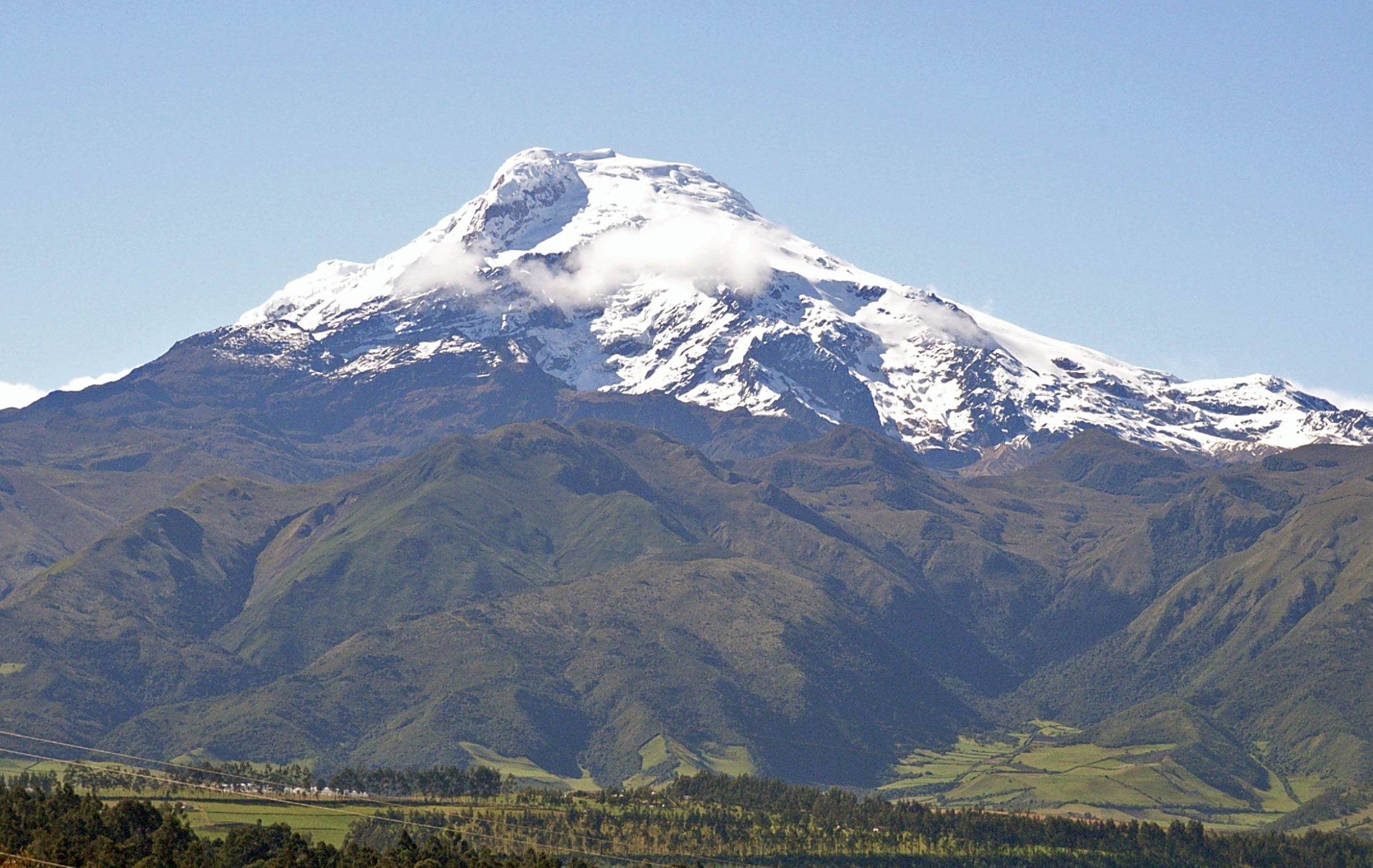
Astra: The animation uses a deliberately aimed Cayambe encounter with representative terminal speed and angle. The progression was a slow asteroid encounter leading to atmospheric capture leading to repeated aerobraking and orbit lowering leading to a shallow, near-orbital-speed approach leading to collision with Cayambe’s upper slopes. The repository records these steps:
- Start with an asteroid strong enough to survive the approach.
We chose a 1 km diameter monolithic iron body, about 4 × 10¹² kg. Its strength was central to the scenario: the calculations assumed it could withstand atmospheric and tidal stresses while losing relatively little material. That let us investigate an intact body progressing into a grazing impact. Capture calculations (docs/capture_feasibility.md:13) - Find a way to capture it into Earth orbit.
An isolated Earth flyby cannot capture an object through gravity alone; it must lose orbital energy. We examined alternative mechanisms and developed aerocapture: a low atmospheric pass removes enough energy to leave the asteroid bound. The distinction is that a slow encounter still accelerates to roughly 11 km/s near Earth, but only its relatively small excess energy needs to be removed. The model found capture possible for incoming excess speeds up to roughly 4 km/s, depending on passage depth and drag assumptions. Capture mechanism and corridor (docs/capture_feasibility.md:23) - Check whether the captured orbit survives the Moon.
Capture alone was insufficient. Adding the Moon, Sun, and Earth’s nonspherical gravity showed that loosely bound orbits could be redirected into steep impacts or escape. The useful grazing-impact cases generally needed a first apogee below about 100,000–130,000 km, with the boundary depending on lunar phase. This narrowed the usable capture conditions. Orbital findings (docs/highfidelity_findings.md:8) - Lower the orbit through repeated atmospheric passes.
Each pass removes speed near perigee, the closest approach, primarily lowering apogee, the farthest point. Successive ellipses become smaller and less eccentric until the body enters a shallow terminal descent. One documented example took 66 passes over 26 days, ending at 7.39 km/s and 1.16° below horizontal. That established the kind of terminal conditions used for Cayambe; inclination remained nearly unchanged. Aerobraking example (docs/highfidelity_findings.md:33) - Identify Cayambe as a physically motivated terrain encounter.
The initial insight was that an orbit references Earth’s center, making geocentric radius more relevant than height above sea level. Earth’s equatorial bulge therefore brought the equatorial Andes into focus. Later simulations refined this: impacts favor low latitudes and broad elevated terrain, but the asteroid does not systematically search out the highest summit. Cayambe remained a useful case because of its almost exactly equatorial location. Later site-selection findings (docs/site_mc_findings.md:22) - Turn that scenario into a specific mountain-impact calculation.
We used 30 m SRTM terrain data around Cayambe, represented the mountain as basalt, and introduced the iron sphere from the west at 7.4 km/s and a 2° downward angle. The setup deliberately aimed its center about 400 m below the summit elevation, producing substantial contact with the upper cone. This was a selected local encounter using representative orbital conditions. Simulation setup (hydrocodes/sph/make_cayambe_ic.py:25) - Simulate the collision and render the animation.
The impact model used three-dimensional smoothed-particle hydrodynamics, with material strength, shock heating, and damage. It progressed from CPU runs to a checked GPU implementation, using about 5.55 million particles at 30 m spacing. The latest animation covers 2 seconds of simulated time; reconstructed surfaces and energy-based coloring show the mountain deformation and departing heated material. Run log (gpu/gpu_run.log:296), rendering method (hydrocodes/sph/recon.py:2)
The key distinction is that the orbital work established a plausible route to these impact conditions; the animation depicts a deliberately chosen Cayambe collision. Also, the project explicitly identifies the fine, lace-like ejecta structure as a numerical limitation—its detailed fragmentation pattern is not a validated physical prediction. Model limitations (docs validation_matrix.md:75)
The top image of this post was lifted from the Wikipedia. The agents wrote the SPH code from scratch.