
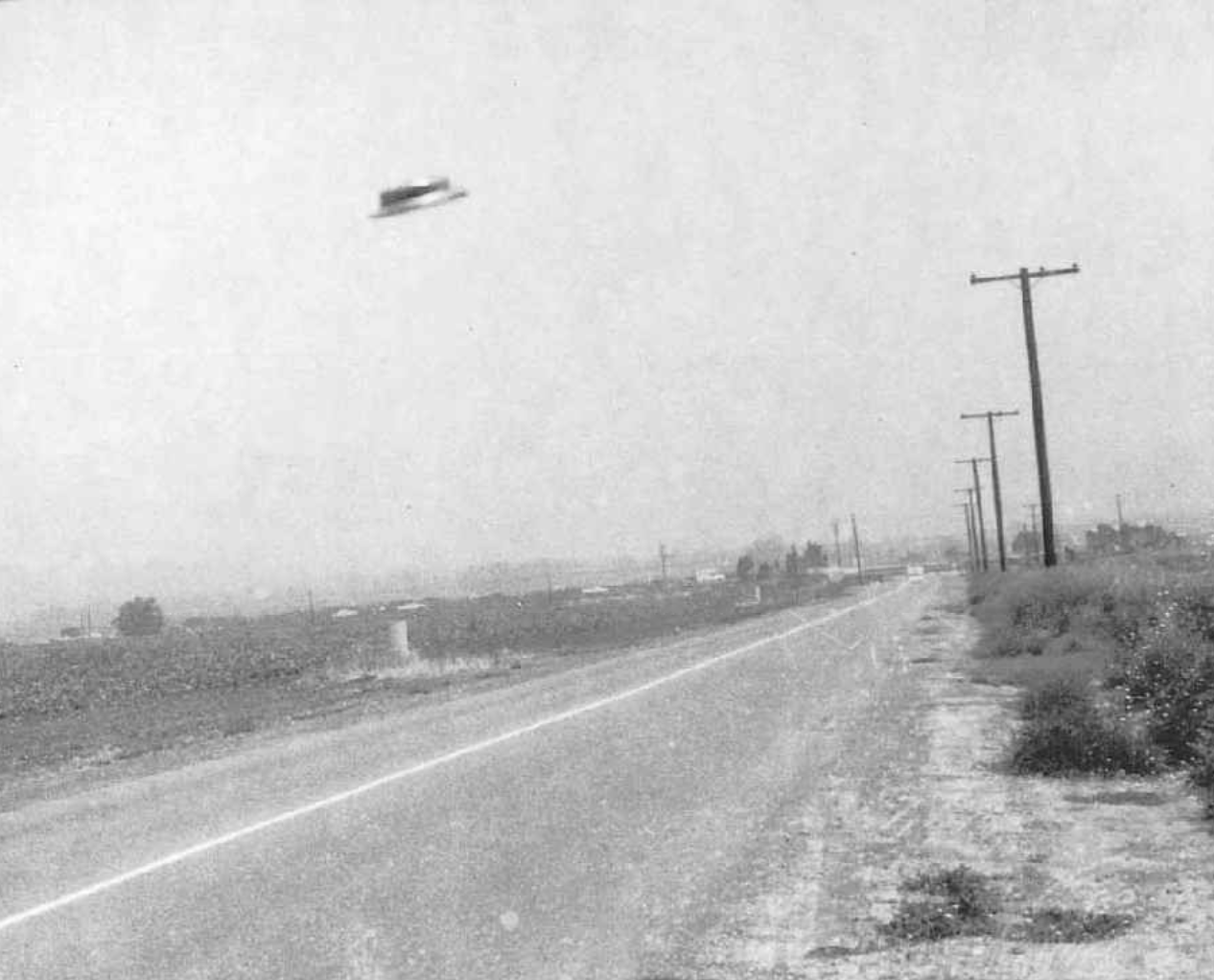
I think hands-down, the first Heflin photograph is the most perfectly iconic flying saucer image. In large part, its allure stems from the composition. The telephone poles. The metallic glint. The dusty deserted highway converging on a vanishing point of shimmering dreamtime mirage.
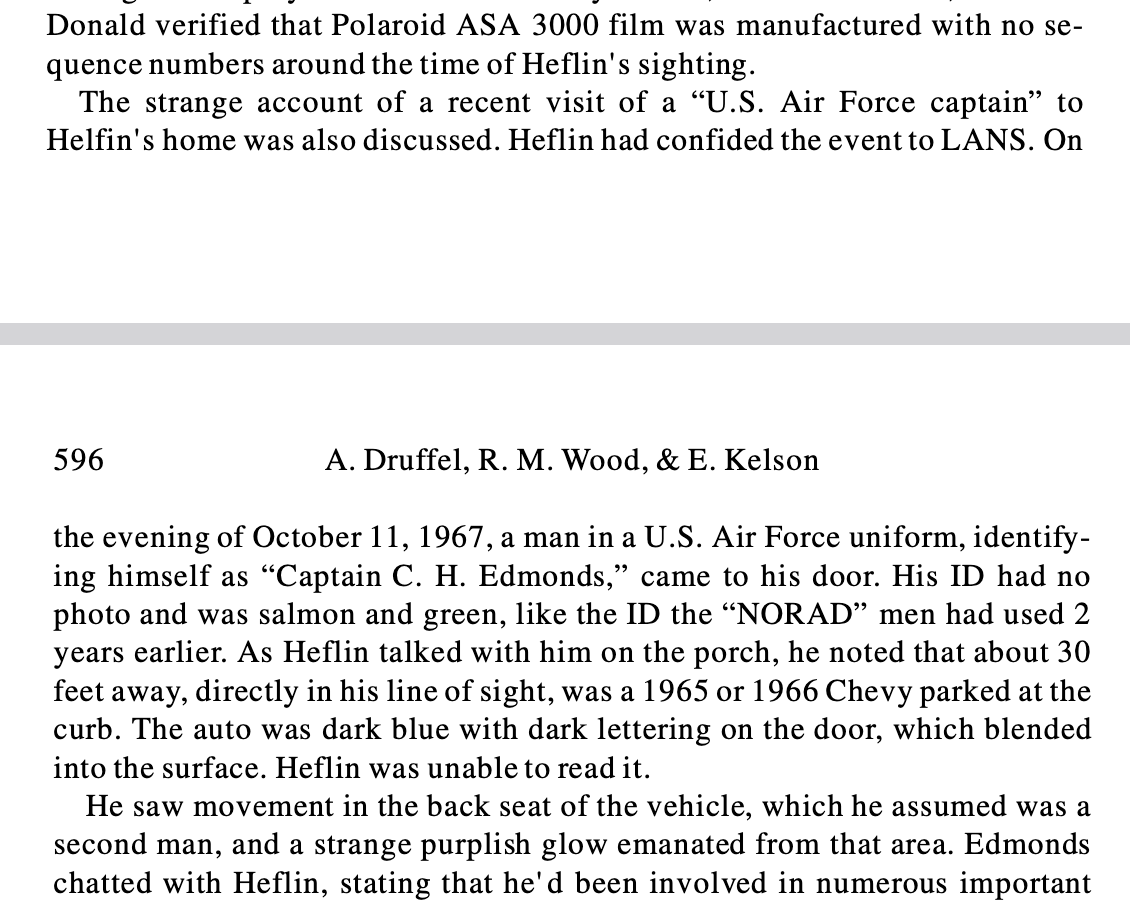
Implicit in the Heflin photograph is the capacity of transport to the moment when it was taken — you feel somehow as if you’re there, frantically rummaging for the Polaroid in the cab of the pickup truck, dust on the dashboard, a rip in the baking vinyl seat covers. I remember, at age 10 poring over the image with a magnifying glass — it was a go-to for all the clay-coated photo-insert pages of the semi-scientific UFO books from the late sixties and early seventies. This paper, moreover from the Journal of Scientific Exploration, Vol. 14, No. 4 (2000) is an enjoyable read. Earnest citizen scientists use the best tools at their disposal to probe the mysterious unknown. There’s even a Gray Barker style visit from a sinister authority figure:
A new interstellar object presents much of the same attraction that the flying saucers produce. It appears seemingly out of nowhere from the gulfs of space. Critically, this is the moment for the more than just an amateur, for the not quite a professional astronomer. Yes! One can play a vital role. In the feverish first days after detection, before the slow wheels of the press offices and the peer review can lurch into action, the soapbox cedes to the characters who normally are out there clamoring in the twilight, just outside the mainstream glare.